
When Home and Studio Become One

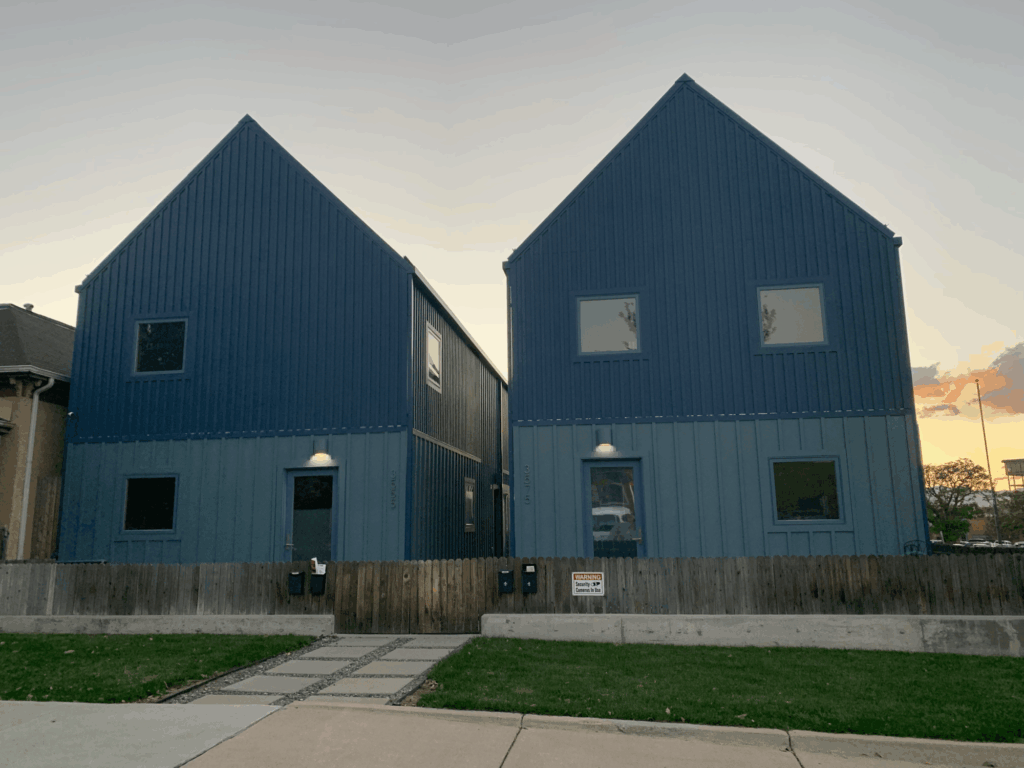
The Blue Houses in Denver's Five Points neighborhood. Photo courtesy of Continuum Partners.
What happens when the distance between living and making disappears?
For artists, the answer is rarely abstract. It’s measured in time reclaimed, energy conserved, and ideas that finally have room to grow. In this chapter of Breaking Ground: Colorado, we look at how models where housing, studio space, and community overlap are creating the conditions for stability, creative momentum, and long-term opportunity.
Across Colorado, artists are showing us that when the basics are secure, everything else can open up.
Live-Work as a Foundation for Creative Stability
Live-work spaces, or spaces where artists’ living and working spaces are intentionally integrated or in close proximity, are often discussed as a real estate typology. But when income is variable, merging living and working space is often the only way to reduce overhead, stay rooted, and continue making work without constant disruption. For artists, they’re a survival strategy and, increasingly, a pathway to sustainability.
When artists don’t have to commute across cities, store work in temporary spaces, or constantly renegotiate short-term leases, the effects ripple outward. The boundaries between living and working soften. Creative output increases. Collaboration becomes more organic. Risk feels more possible.
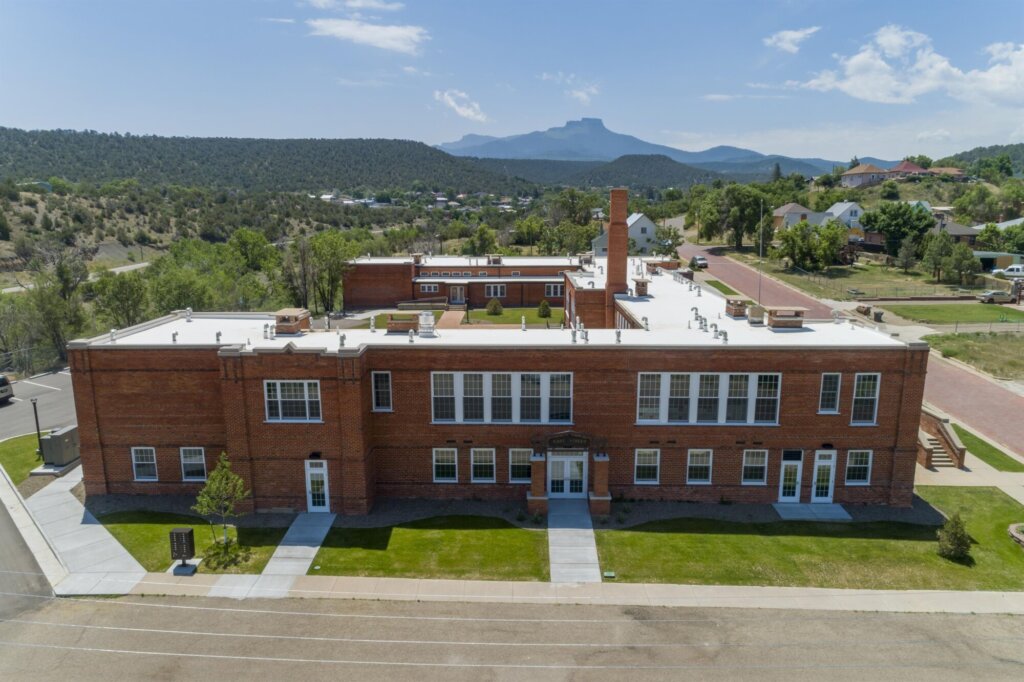
That understanding has shaped the East Street School in Trinidad, Colorado from the very beginning. When the ~23,000 square foot former school building was redeveloped in 2019, it was envisioned not as a short-term arts activation, but as a permanent arts and culture asset that could anchor creative life in a rural community and respond honestly to how artists live and work. From the start, the goal was to ensure that the building would remain dedicated to arts, culture, and community, rather than drift toward market-rate redevelopment as interest in the region grows.
A New Chapter at the East Street School
The East Street School is a long-held vision rooted in honoring artist Clark Richert, one of RedLine Contemporary Art Center‘s earliest mentoring artists, who saw the roughly 9,000-resident town of Trinidad as a place where artists could build community, stability, and long-term presence. Located between two major art hubs, Denver and Santa Fe, Trinidad has long been overlooked despite its rich architectural history and burgeoning creative communities.
Originally built in 1919 to serve Trinidad’s eastern neighborhood, the East Street School was designed as a light-filled, community-centered space, with wide corridors, generous classrooms, and an open courtyard meant to foster gathering. For decades, it educated generations of local children before closing in 2002, later earning a place on the National Register of Historic Places. Its open and large-scale design has made it uniquely suited for a second life rooted in community.
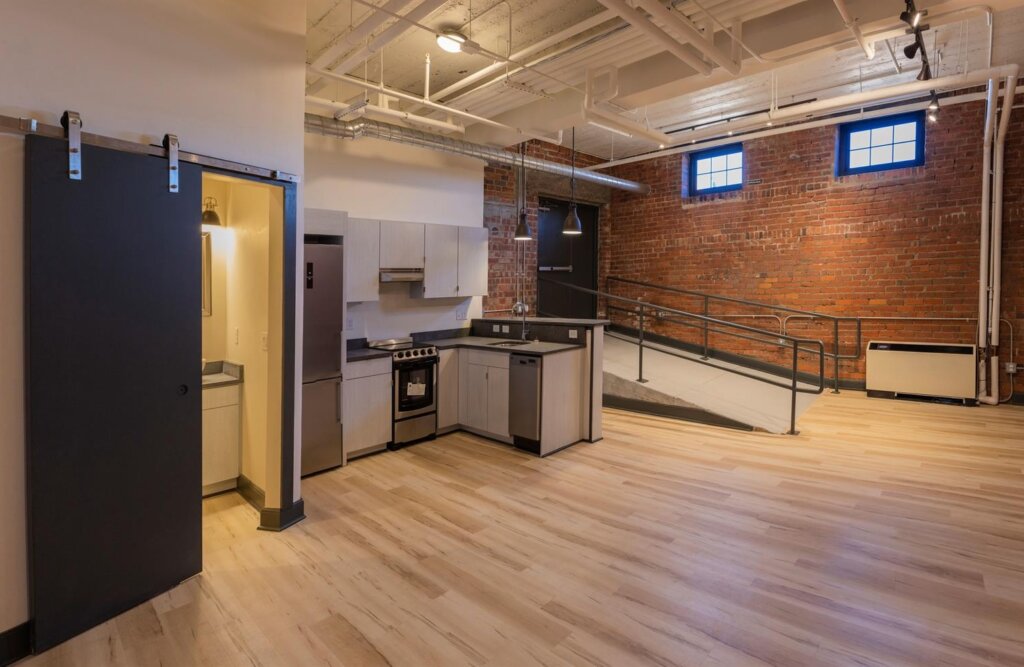
When the opportunity arose to reimagine the building in 2022, CAST Managing Director of National Programs Louise Martorano worked alongside local partners to ensure the project stayed true to that legacy. Rather than imposing a model, Louise convened artist community meetings in Trinidad to listen and understand what artists actually needed for their practices and livelihoods. Those conversations directly shaped the building’s current configuration with four artist studios on the ground floor, 13 live-work units above, a large commercial and culinary space for events and community wellness programming, and a mix of residents that includes artists, creative community members, and faculty from Trinidad State College.
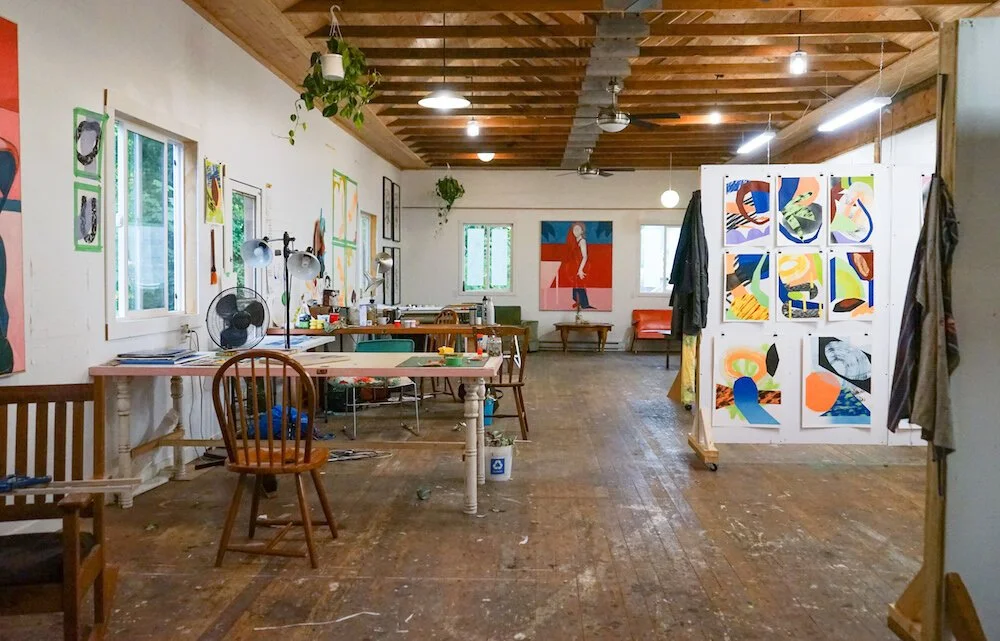
That community-first approach will continue to guide CAST’s stewardship of the space and anchor the building as a long-term arts and culture asset for Trinidad. Decisions around future exhibitions, programming, and even the addition of a culinary partner to increase food access in Trinidad will be informed by the community itself, reflecting our commitment to shared governance and local voice.
For artists like Autumn Hunnicut, the impact of this space has been profound. “The East Street School has been such a rare gem to find,” Autumn shared. “I was looking for a studio space after returning to Trinidad, CO after backpacking for several months in California. I had decided to really make this art thing work and that meant needing a space completely dedicated to my practice.” Since moving into her studio, she has completed more than 40 paintings and mounted a solo exhibition on site. “The affordability has given me room to breathe and grow my business without fear… I’ve been able to pursue opportunities I would have previously considered out of my league.”
Her experience reflects what artists across Colorado have been telling us. When living and working spaces are integrated, artists gain stability, dignity, and room to take creative risks.
The Importance of Proximity
In Denver, the Blue Houses offer a different but deeply connected model. Designed as a co-housing community for artists in collaboration with the Denver Cultural Property Trust, the Blue Houses are eight live-work affordable housing units centrally located in the Five Points neighborhood, where living and making are designed to be intentionally close, sometimes within the same walls.
Each approximately 600-square-foot-unit offers private bedrooms and bathrooms alongside shared kitchens and living rooms, fostering daily interaction without sacrificing autonomy. Some artists base their studios directly in their living spaces, while others pair housing at the Blue Houses with nearby studios.

For curator and artist Esther Hernandez, that proximity changed everything during a pivotal moment. “The Blue Houses came through for me during a difficult period, offering a place to land and heal,” Esther explained. “As a curator and an artist, being in community with other artists is essential for me, it’s where meaningful conversations happen and where collaborations naturally emerge.”
Living amongst other artists didn’t just provide stability for Esther, it sparked new work. “While living there, I worked with two other artists to bring their exhibition ideas to life at Union Hall, where I work as a curator. The process felt organic and effortless, rooted in shared trust that grew from being in such close proximity and in regular exchange.” When housing is designed with artists in mind, community is intrinsic to the very structure.
Studio Access and Community Impact
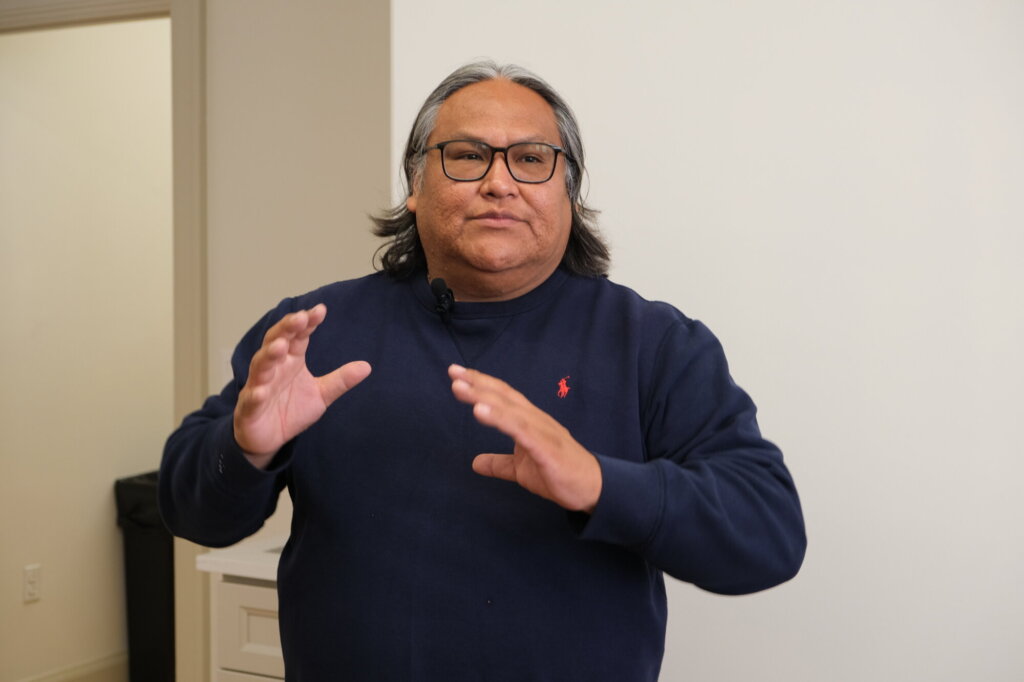
Artist JayCee Beyale, who maintains a studio at the Evans School and lives at the Blue Houses, describes stable access to space as foundational in building relationships and sustaining community-centered practice. “This space has been able to allow me to connect to different people and network with them, because without them, I wouldn’t be out in the field painting,” said JayCee.
Since gaining studio access, JayCee’s work has expanded outward across Colorado through murals, public art, and collaborations rooted in Indigenous advocacy and collective action. “I’ve built this really strong network of people, not only on my own doing with the help of other people…You know, it’s very community based, and that’s kind of how I see my artwork.”
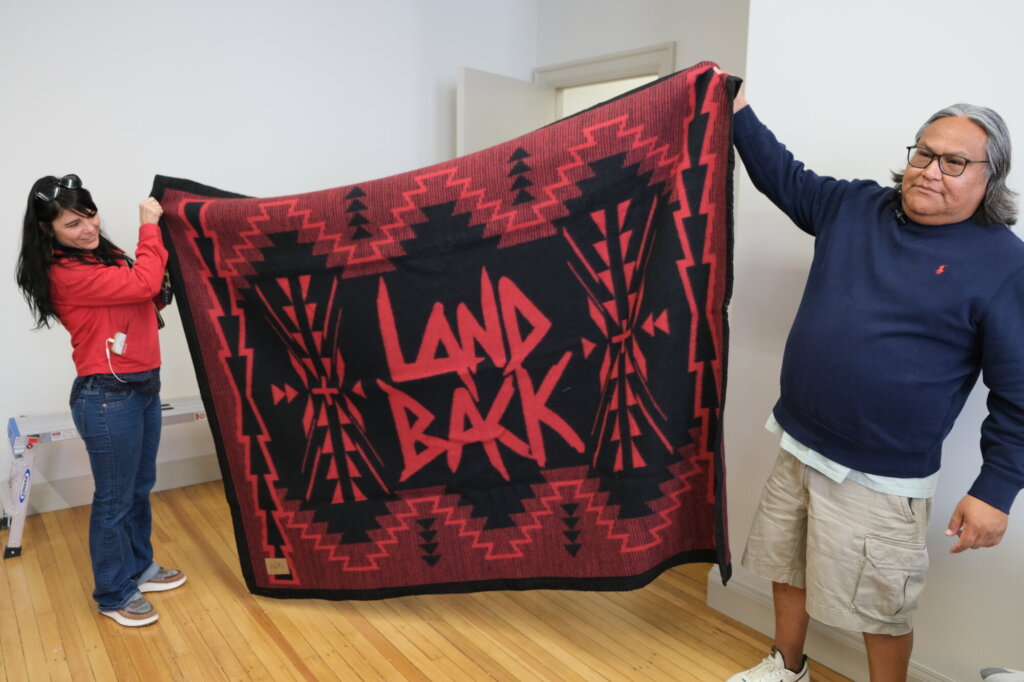
That community-centered approach extends to his work with NDN Collective, where art functions as both expression and solidarity. “We do a lot of action work…but we teach these types of methods to indigenous people. We’re Indigenous-led, and we’re doing it through our own means…allowing our own people to take on these different ways of communicating.”
His experience reflects a broader truth across our work in Colorado. When artists have stable places to work and live, their impact travels far beyond the walls of any one building, into movements, neighborhoods, and futures shaped collectively.
Comparing Conditions Across Cities
Live-work and proximity-based models respond to necessity. In Denver and Trinidad, artists in spaces like the Blue Houses and East Street School are paying roughly $1,000 to $1,300 per month, a level of affordability that makes stability possible. That reality stands in stark contrast to the Bay Area, where comparable units are prohibitively more expensive and out of reach for so many.
This difference is why we’ve begun our venture into live-work spaces in Colorado. While the need is urgent in the Bay Area, the conditions in Colorado paired with strong local partners and public investment make it possible to move earlier, test models, and protect space before displacement accelerates.

Both the East Street School and the Blue Houses show what’s possible when live-work space is treated as essential cultural infrastructure. Local Bay Area examples like Project Artaud in San Francisco, Shadetree in Oakland, and the 45th Street Artists’ Cooperative in Emeryville are additional proof that there are ways to create affordable artist housing that in turn, positively impacts the creative economy and connects the community in deep ways.
These spaces point toward a future where artists aren’t forced to choose between making a living and making work. Even as the affordable housing system remains constrained, we are committed to elevating alternative models, interrogating assumptions, and helping shape policy to reflect artists’ lived realities. The ability to work and live affordably as an artist should not be a rare exception, but an attainable norm–one that housing developers should actively prioritize for creative communities. That is the ground we hope to break next.
Read the series
This is an ongoing series following CAST’s expansion into Colorado. Follow along for the lessons we’re learning as we develop affordable space opportunities for and with artists and creatives on the ground.
- Securing Space
Breaking Ground: A New Chapter in the Rockies
This next chapter of Breaking Ground follows CAST’s expansion into Colorado, where we’re deepening our focus on affordable space for arts and culture.
- Securing Space
Denver’s Downtown at a Crossroads
A look at the transformation of downtown Denver, where post-pandemic vacancies are creating a rare opening for creative reuse.

- Securing Space
How Denver Artists Are Rewriting the Terms of Space
How Denver artists are reshaping ownership, negotiating their own agreements, and building sustainable, artist-led spaces across the city.