
Denver Business Journal: Former downtown bank branch to get new life as microcinema and gallery
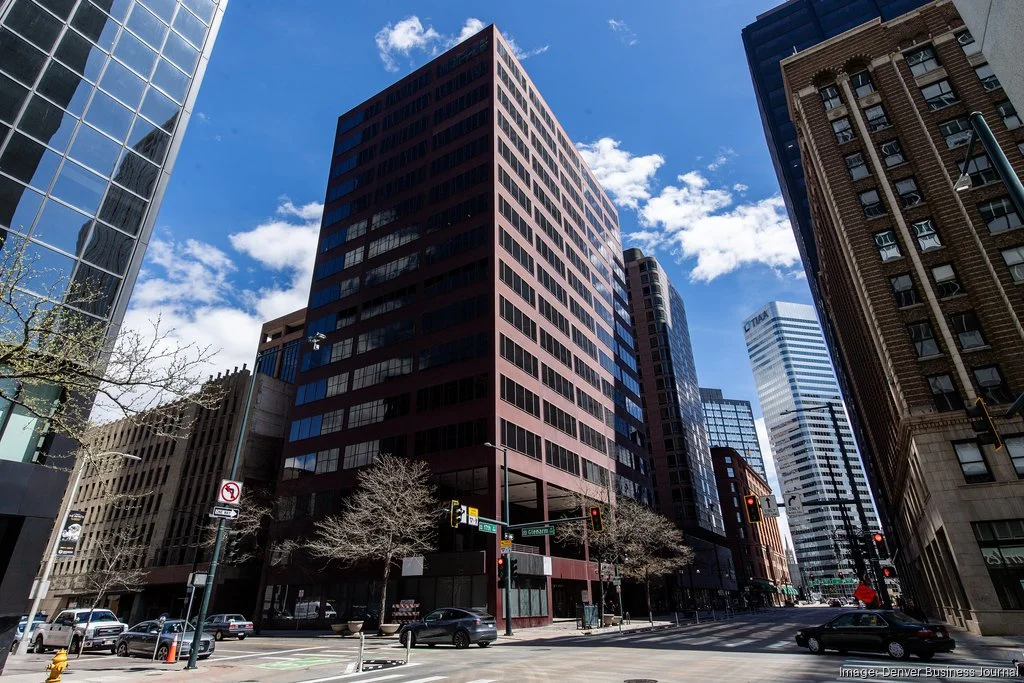
Photo by Seth McConnell
By Catie Cheshire
A long-vacant storefront in downtown Denver could soon transform into an artist space and microcinema thanks to grant funding help from the Denver Downtown Development Authority.
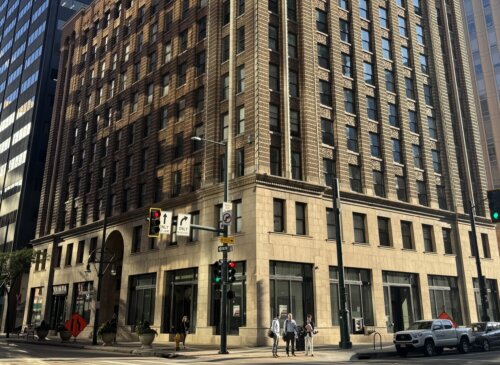
The Community Arts Stabilization Trust Colorado worked with the city over the last year to refine a plan to take what used to be an ANB Bank branch at 444 17th St., just off downtown’s 16th Street, and make it into an affordable place for artists to develop, showcase and store their work.
The DDDA approved a $1.35 million grant in June to help CAST purchase and renovate the space, which has been empty since the bank closed in 2021.
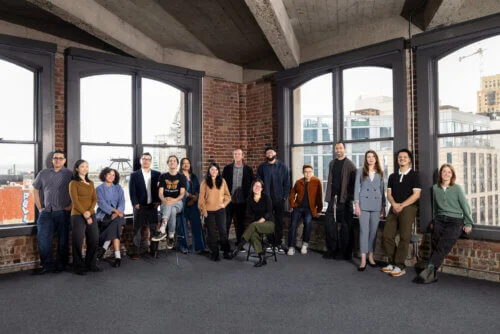
CAST, a Bay Area-based nonprofit, was founded to create permanence and ownership of real estate for nonprofit and cultural groups. Louise Martorano, who served previously as executive director of the local RedLine Contemporary Art Center, brought CAST to Colorado after realizing how important real estate is to helping artists thrive while at RedLine. She now serves as managing director of national programs for CAST.
“I was seeing these numbers of need for affordable space just increasing and increasing,” Martorano said. “What the Colorado program invited CAST into was to stand up a formal, national scope and also introduce the way that the organization can support artists’ ownership versus just nonprofit ownership.”
CAST Colorado’s first acquisition was the East Street School in Trinidad. The retail condo in the 444 17th St. property will be its second.
Graduating from their homes into studios, or even acquiring storage space for their work, marks a huge step for artists that DDDA funding will help enable, Martorano said.
“Artists, when they went from a kitchen table to a 350-square-foot studio, you saw the ideas grow and the visions were suddenly accommodated,” she described. “Artists don’t need my help with their ideas, they need the infrastructure for those ideas to be supported.”
The DDDA has tended to prefer loans over grants to keep recirculating its capital for downtown revitalization, but, like CAST, a few groups have received grants.
A grant is necessary so the space can actually fulfill its purpose, Martorano said. Now, all CAST will need to worry about is Home Owners Association fees, property taxes and insurance instead of monthly payments on a mortgage or loan, enabling the group to pass savings on to the artists who will use the space.
“The idea is the studio spaces will be super affordable, the storage spaces will be super affordable, the microcinema will be super affordable, the gallery will be super affordable and all of it can happen because of that initial investment in securing affordable space,” Martorano said. “This is not a commercial endeavor for us. This is a community objective.”
Affordable storage is a particular need that Martorano identified in her past work. Many storage spaces are expensive or far from the city center, she found. The total space CAST plans to acquire covers 6,300 square feet.
In addition to storage space, about five studios, a gallery and an approximately 50-seat theater will fill out the space.
“Denver’s commitment to investing meaningful resources in arts and culture demonstrates what is possible when cities recognize creativity as essential civic infrastructure,” said Ken Ikeda, CEO of CAST, in an announcement.
It wasn’t an easy road with the DDDA. CAST had to return for multiple board meetings to make its case about the funding. Originally, CAST applied for funds last October, requesting $1.5 million. Because the process is iterative and involves many city departments and touch points, Martorano understands why it took many months to reach an agreement, saying that’s how most cities and city processes tend to work.
“The fact that you know this took 11 months and is still going is all the more reason why I think organizations like CAST need to exist,” Martorano said. A single artist isn’t likely to have the time to attend a series of meetings over months to work out funding strategies. They also have art expertise, not necessarily real estate chops, so CAST being able to undergo the process on behalf of local artists eliminated a barrier many would face to achieve such funding independently, Martorano said.
The Denver City Council still will vote on final approval for the funding allocation, which is expected to occur in August. CAST anticipates opening next Spring.
CAST is working with local partners to identify groups to co-locate with or who will use the cinema and galley spaces, Martorano said. Those announcements will follow in the coming months, Martorano said.