
Beyond the Headlines: Carolina Osoria on Trans Joy, Community, and the Tenderloin
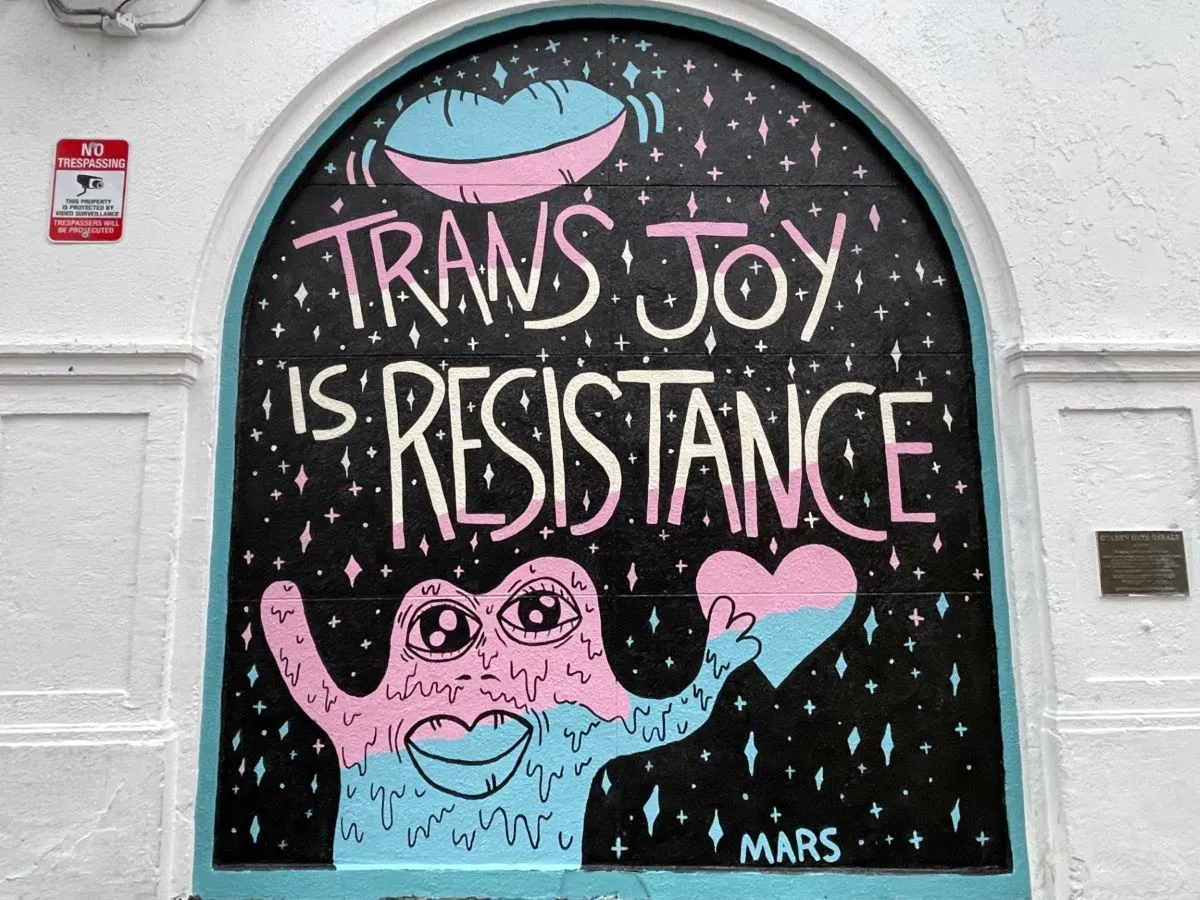
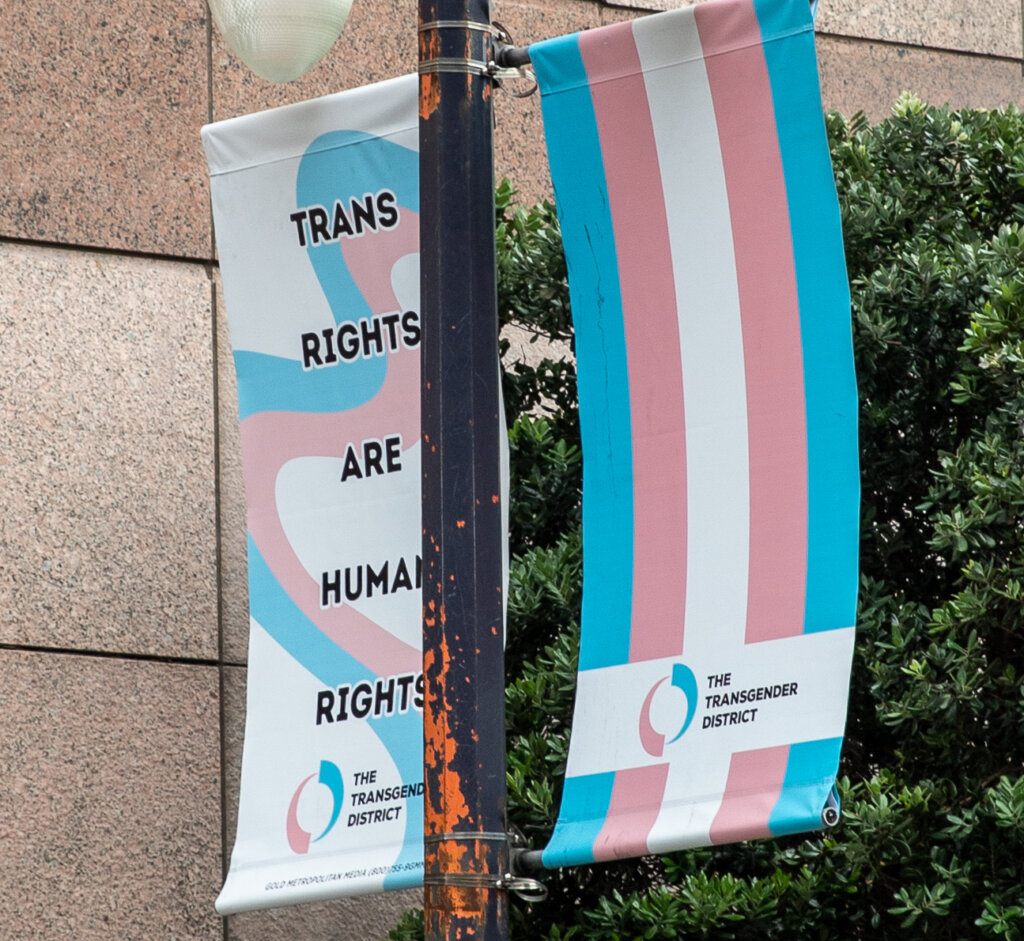
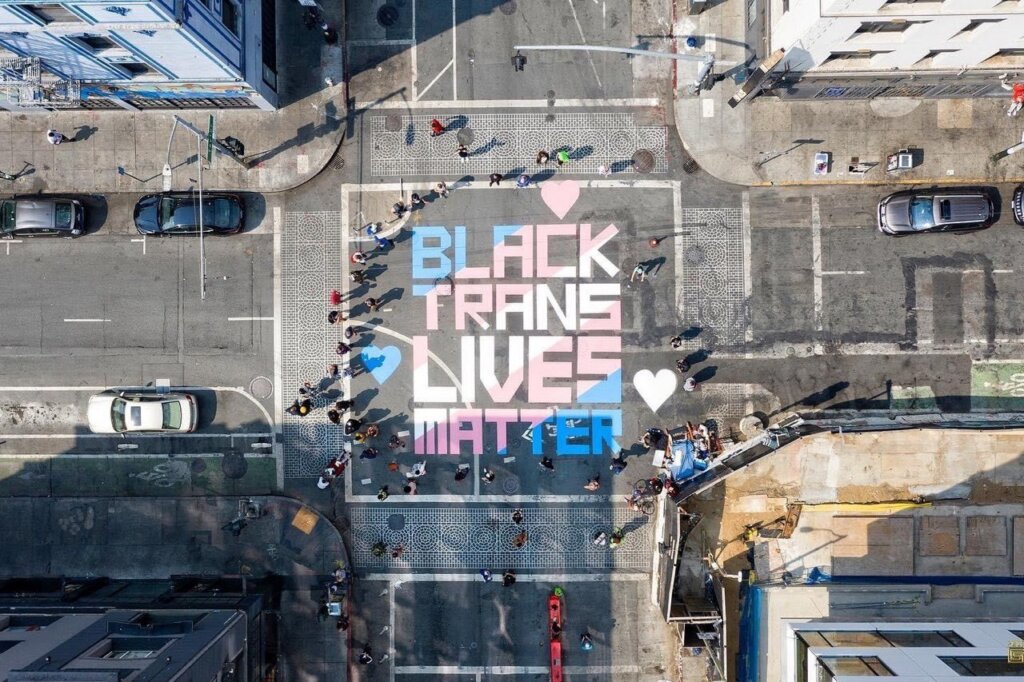
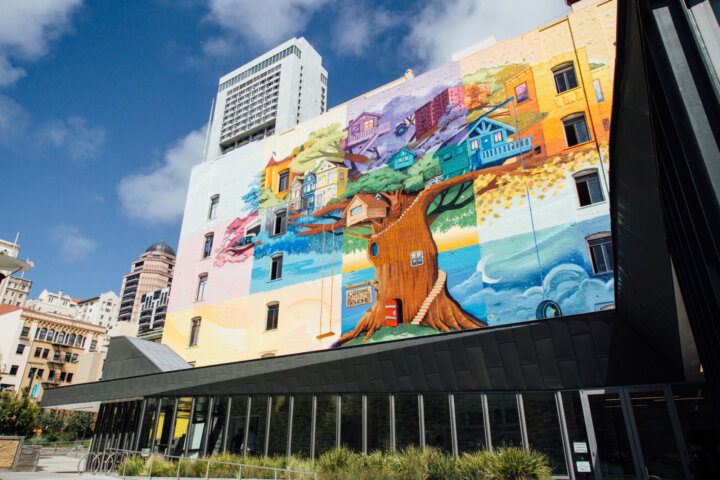
Mural by Mars Wright, commissioned by The Transgender District.
Developed in partnership between CAST & KALW Public Media
Interviews & content drafted by KALW Community Journalism Director Hanisha Harjani
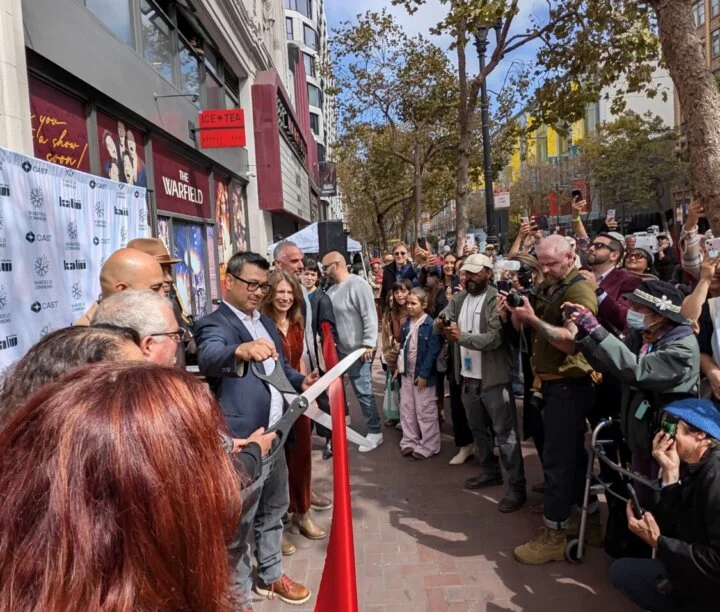
This interview is part 1 of a 4-part Breaking Ground (opens in new tab) blog series exploring the people, places, and ideas shaping San Francisco’s Mid-Market and Tenderloin communities. As Warfield Commons (opens in new tab) opens its doors, we’re taking time to listen, learn, and get to know the communities that have long been rooted here and to explore how new neighbors can show up for each other.
KALW met Carolina Osoria on a hot summer day outside 64 Golden Gate Avenue in the Tenderloin. The space is an active garage but it is now also a place where transgender history is commemorated with six murals about trans life in the city — from a depiction of the Compton’s Cafeteria Riots to a collage of local trans spaces to portraits of the founders and more abstract works depicting trans joy and resistance.
San Francisco is home to the world’s first and only Transgender District (opens in new tab), which was established nearly a decade ago. Carolina is the district’s Program Associate. KALW got to sit down with her to get a sneak peek into what it means to be an art and cultural district in the city and how they have been showing up in the community during the time they have been around.
This interview has been edited for length and clarity.
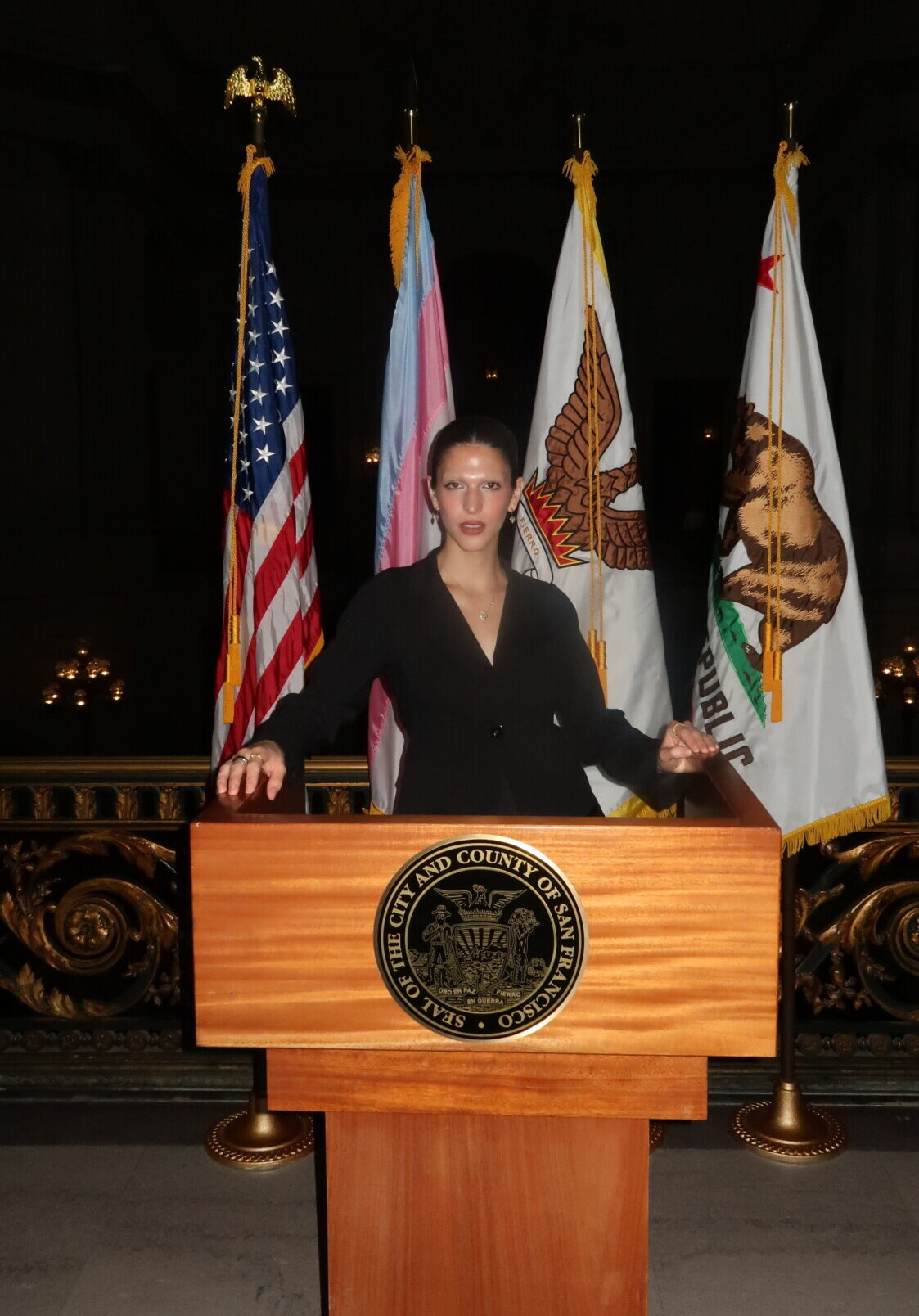
KALW: The Transgender District has been around for nearly 10 years. Can you tell us about what strides have been made over the course of that time and what it means to be celebrating 10 years of this work next year.
CAROLINA: Next year, we are completing 10 years as still the first and only legally recognized Transgender Cultural District in the world. That speaks volumes, that since our founding almost 10 years ago, no other initiatives have been made to build another Transgender Cultural District.
It’s been 10 years of impeccable life-changing work — the rent stabilization program, name and gender clinics, trans-led initiatives and movements to preserve our wellbeing and to stabilize our community.
The Transgender District was created by three beautiful Black women to counter developers coming into the Tenderloin and pricing people out. As a district, we are constantly grappling with gentrification but also trying to reinvigorate and bring life into the Mid-Market corridor and the Tenderloin.
We are moving forward in this 10-year anniversary to continue this work because trans visibility will always be needed. If trans people are affected, everyone else is affected. Our community deserves to be highlighted and recognized for their beauty and their work and their contributions to society.
KALW: Tell us more about the history of this area. Why is this space called the Transgender District?
CAROLINA: It’s quite literally called that because this was the largest concentration of trans people.
During the 1960s, it was illegal to have an article of clothing that did not match the gender that was assigned at birth. For folks that were trans, it would be incredibly difficult for them to even find a job, to rent.
So, this was one of the areas that was most policed and that policing also contributed to the fact that trans people were having to perform acts of sex work in order for them to survive. There is a direct connection between police brutality, oppression, sex work, and the district.
At the district, we advocate for all people’s liberation. Trans people will liberate everyone, because these systems that oppress us oppress everyone else.
As long as we continue to inform ourselves and prioritize our joy as a form of liberation, we will continue to exist and succeed.
KALW: How does the work you do at the Transgender District ripple out to the rest of this neighborhood?
CAROLINA: When we think about the ways in which trans people are disenfranchised — having to get documentation for themselves, access to healthcare, how difficult it is to get a job because we’re constantly discriminated against or hypersexualized — there’s overlapping elements.
When we center the most vulnerable and the most marginalized in how we want to change society, we’re able to fine-tune what actually we need.
Bare minimum: we need access to affordable housing, access to employment, fair employment that doesn’t discriminate upon you because of your race, gender, or sexuality, and we need access to healthcare.
KALW: How is the current administration’s stance on this neighborhood impacting the District and its experience working in this area?
CAROLINA: It’s so nuanced because there are so many parts to working with the mayor’s office. The mayor is trying to work with the transgender community here. He is. He’s trying to learn. He’s trying to get to know what our community actually needs. There’s a constant curiosity and he’s trying to open his worldview as a man that comes from immense privilege.
But at the same time, the district is in one of the spaces that he wanted to change the most and that is Sixth Street. I think his efforts to revitalize that area were an interruption to the community and didn’t really prioritize the community. When we think of folks receiving city services, and substance use, this becomes very problematic because their circumstance is being used against them. And there is no real understanding of the root cause.
Mayor Lurie really tried his best to connect with different communities to really push his candidacy as the mayor and I really want to remind him — of these communities that he tapped into and who he mentioned he would help — to keep that promise.
There’s an element of pinkwashing in this and our community being used as a media moment and a moment for diversity only for a specific amount of time. I think that is very problematic because you can’t use a specific community and then be upset when that specific community does not feel comfortable with you being around them.
When it boils down to it, it’s exploitive. You’re exploiting the community to further best your interest. But if you’re coming to our community and you are wanting to help and you want to uplift in the same way that you wanna uplift your own community, there has to be consistency, real relationship building, and not abandonment.
Right now, we’re seeing legislation being introduced against trans people and our community is constantly being used in this manner for talking points, for attention, for publicity. But what does that do for our community? It further marginalizes us, it further ostracizes us, and it stresses us out, and disenfranchises our ability to live a dignified life.
We are constantly split between how we think the world sees us, how the world sees us, and how the people that are advocating for our rights are quite literally using our identity as a pawn, and that’s not right by any means necessary.
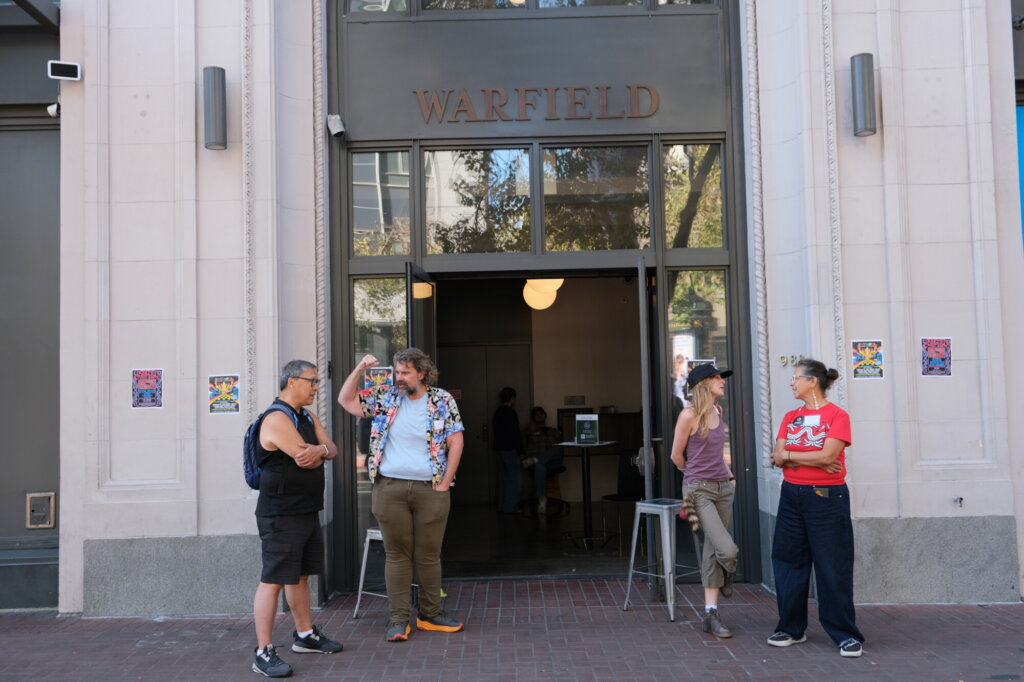
KALW: This neighborhood has seen a lot of change over the years. With the Warfield Commons coming in, there will be new groups of people in the neighborhood. As an organization that is coming into this space as a newcomer, what do you think is important for people to know about this neighborhood and how to show up?
CAROLINA: It’s important for people who are coming into a community to go out on the street and meet them. They are not different from you. They are your community, they are your constituents.
Get involved with the events. Get involved with the beautification of the neighborhood, not in a gentrifying manner, but seeing what local organizations are actually wanting to do. Invest in the community. Give money back into the community because the community will also nourish you.
If you can’t financially contribute to the community your time is also necessary. There’s always different food banks, other volunteering opportunities for you to contribute to.
For instance, within the Transgender District, we’re constantly working with the Tenderloin housing community clinics. We’re working with different organizations that provide immigrant rights and we constantly have our ear tapped into what our community needs.
KALW: What role do you see the Warfield Commons playing in the work you’re doing?
CAROLINA: We want to see the Warfield Commons connect with us more and allow us to connect them with fabulous, amazing artists that they can bring on stage, highlight, center, because the Transgender District has some of the most sickening performers. So investing in our community and uplifting our community members to actually get a means of economic empowerment is something that will bring and revitalize the Mid-Market corridor.
I think also bringing that investment into creating spaces and avenues to directly help build those relationships with different business partners. For community to have a storefront or have the space where they can share their talent, their work, and not have to go through bureaucratic barriers to economically empower themselves.
KALW: Can you talk about what has worked for this community and what has failed?
CAROLINA: What has failed with our community is small, short-term investments with no real means to sustain it; people coming in and deciding for our community what we need; our community being priced out and displaced because of how expensive it is.
This is a call for people who wanna invest in the transgender community in San Francisco because people are coming to San Francisco to access healthcare and be their true, authentic selves. We need that investment to stay here.
KALW: Anything else you want people to know about the trans community?
CAROLINA: If you are an ally and you are not trans and you wanna help the community, come to our events. Come to our community and really breathe the beauty of it.
With how the administration’s painting us, this is your chance to get to know the beauty of trans culture and the queer community.
August is Transgender History month — Carolina says you can support the Transgender District’s work by:
- Donating to the Riot Fund (opens in new tab) — a multi-year emergency fund created in response to escalating budget cuts, rescinded grants and a wider trend of institutional divestment from trans-led organizations both locally and nationwide.
- Going to an event hosted by the Transgender District — check out their calendar (opens in new tab) for events celebrating Transgender History Month and more.
- Staying in touch with them via their Instagram (opens in new tab) and website (opens in new tab).
About Hanisha Harjani
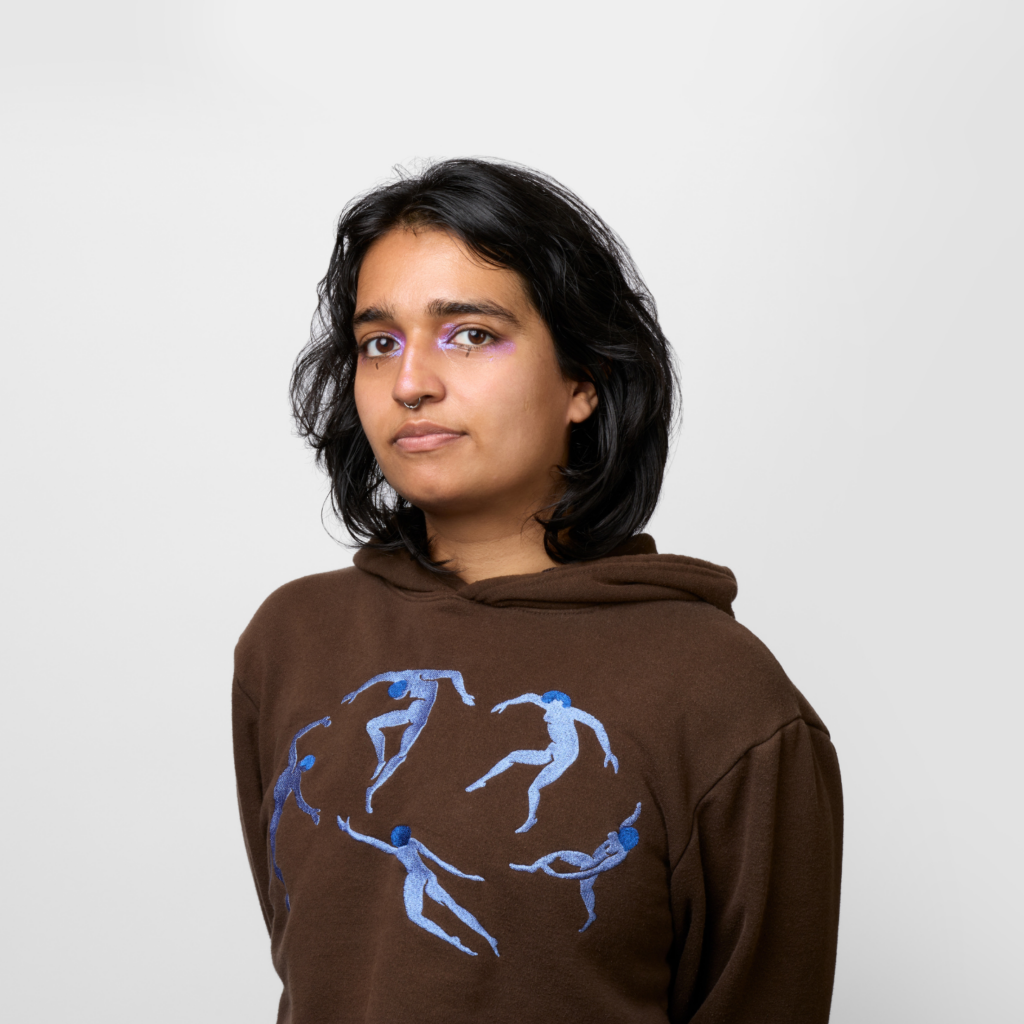
Hanisha Harjani is a journalist, educator, and multimedia artist living on unceded Ohlone land. They’re an award-winning reporter, producing work for outlets like NPR, The Guardian, the Markup, and the San Francisco Chronicle, where they’ve helped tell stories about mommy blogging, conversion therapy, psychedelics, dating apps, and satanism — among other things. They currently work as the Community Journalism Director at San Francisco NPR member station KALW (opens in new tab), where they facilitate training programs for new and early-career radio reporters taking non-traditional pathways into journalism. They also produce experimental radio show — transmissions from [the psychic deli] (opens in new tab) — on online community radio stations.
Read the series
This four-part blog series was developed in partnership between CAST and KALW Public Media, with interviews and content drafted by journalist, educator, and multimedia artist Hanisha Harjani.
- Community of Practice
“Fall in Love with the Tenderloin”: A Conversation with Del Seymour
Del Seymour shares what makes the Tenderloin feel like home, how the neighborhood has evolved, and what he hopes new neighbors will understand about the community.
- Community of Practice
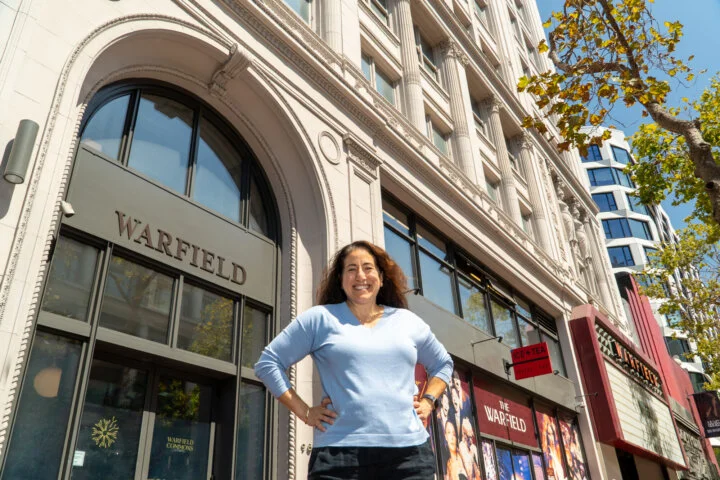
A New Home for SF Public Press: Lila LaHood on Community, Journalism, and Warfield Commons
Lila LaHood on how it feels to be a new tenant in Warfield Commons and her hopes and dreams for her newsroom, the community of the building, and beyond.
- Community of Practice
Warfield Commons Meets the Neighborhood
Lila LaHood on how it feels to be a new tenant in Warfield Commons and her hopes and dreams for her newsroom, the community of the building, and beyond.