
“Fall in Love with the Tenderloin”: A Conversation with Del Seymour
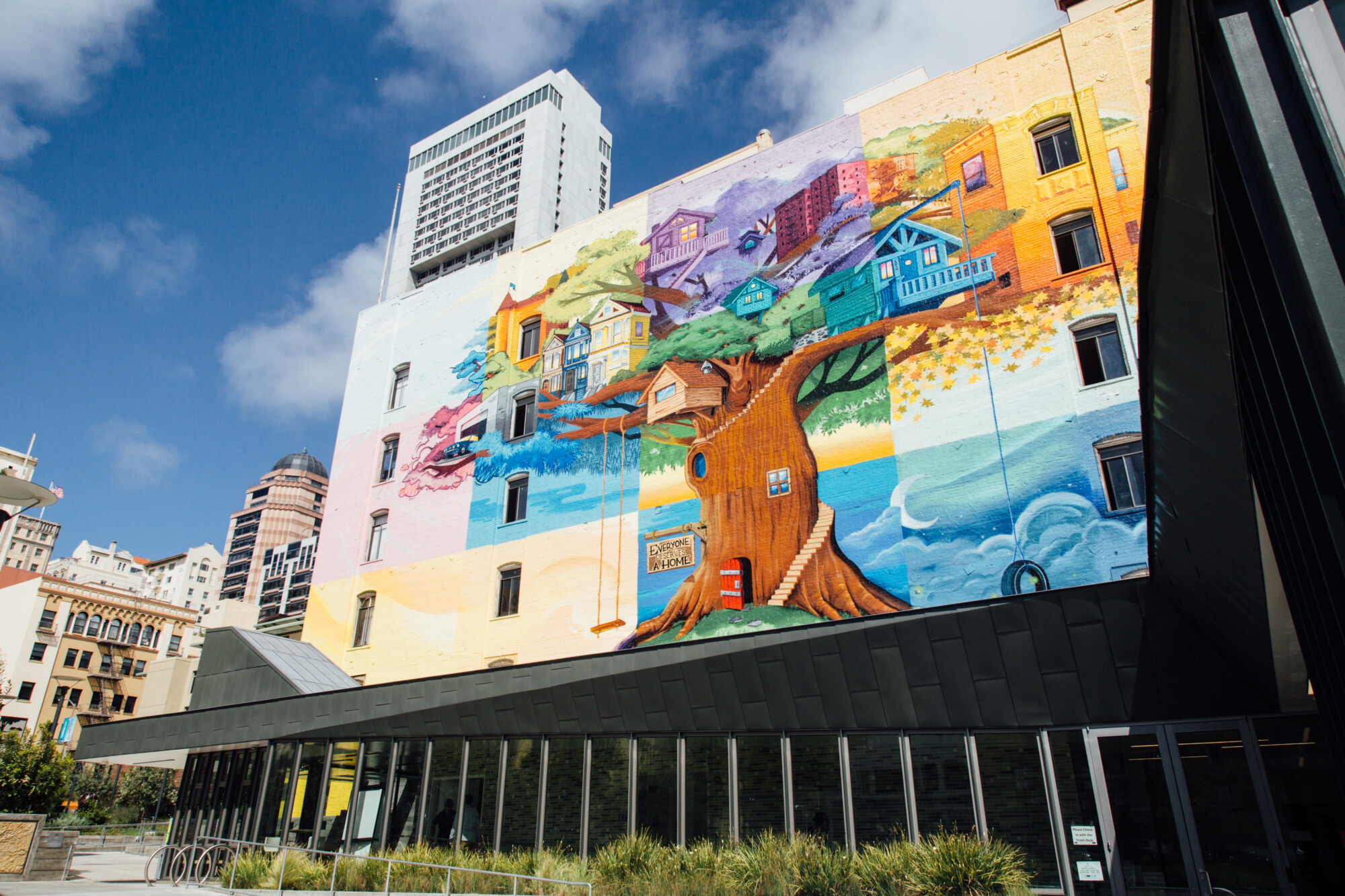
"Everyone Deserves a Home" mural, produced by 1AM in partnership with Delivering Innovation in Supportive Housing (DISH) and Friends of Boeddeker Park. Photo courtesy of Tenderloin Community Benefit District.
Developed in partnership between CAST & KALW Public Media
Interviews & content drafted by KALW Community Journalism Director Hanisha Harjani
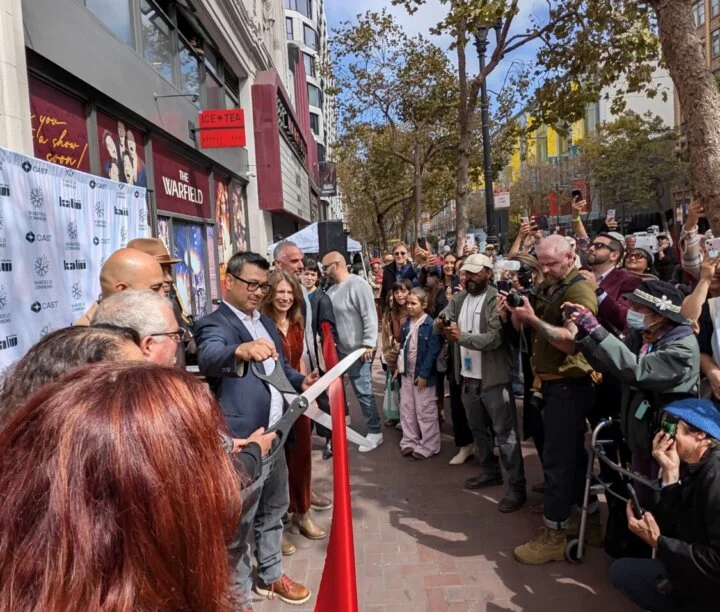
This interview is part 2 of a 4-part Breaking Ground (opens in new tab) blog series exploring the people, places, and ideas shaping San Francisco’s Mid-Market and Tenderloin communities. As Warfield Commons (opens in new tab) opens its doors, we’re taking time to listen, learn, and get to know the communities that have long been rooted here and to explore how new neighbors can show up for each other.
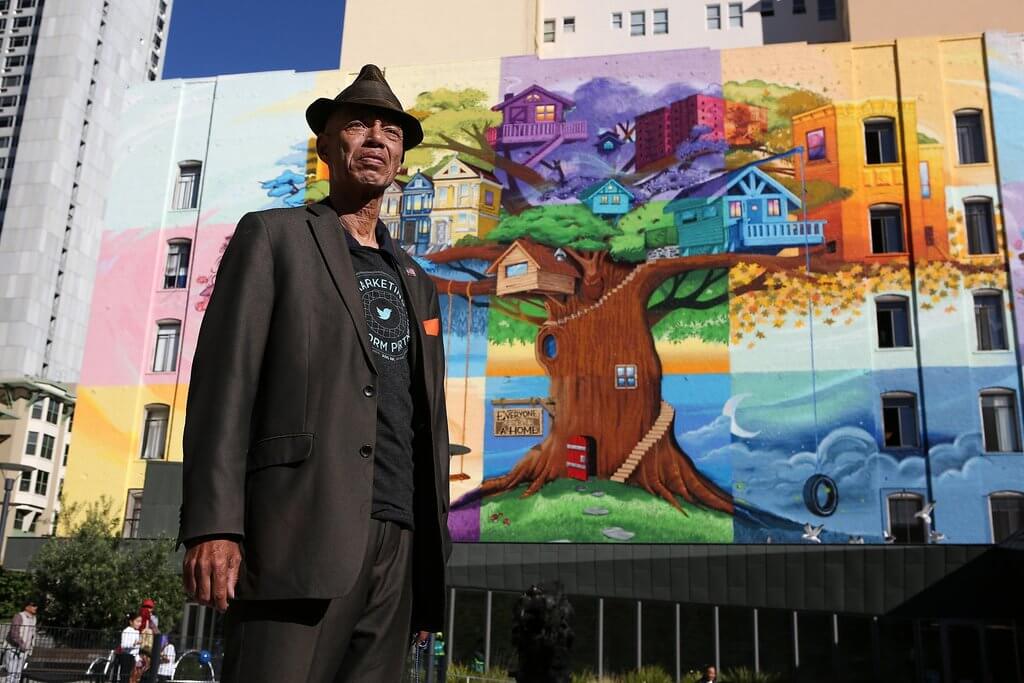
When KALW reached out to find a time to talk with Del Seymour, he suggested meeting at Boeddeker Park on the corner of Eddy and Jones streets. Walking into the park that sunny Tuesday afternoon, the space was alive with such a specific San Francisco energy. A mural entitled Everyone Deserves a Home, produced by 1AM (opens in new tab) in partnership with Delivering Innovation in Supportive Housing (DISH) (opens in new tab) and Friends of Boeddeker Park (opens in new tab), featured prominently on the building overlooking the park, its tree design connecting the idea of home with the community around it. There were community members playing on the basketball court and soccer field. Others sat on park benches or tables.
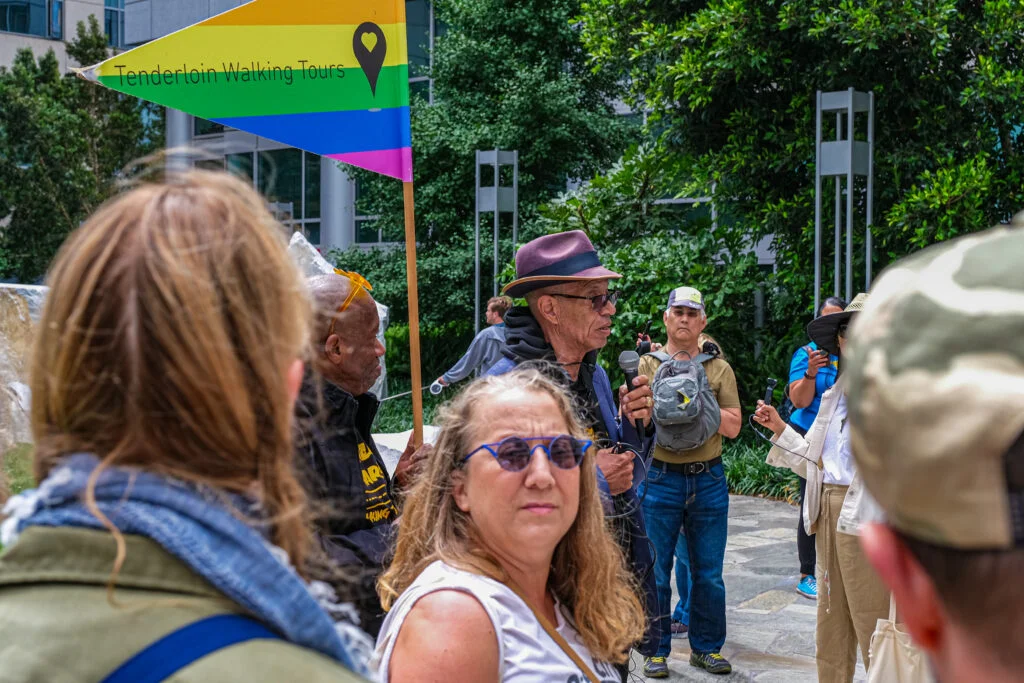
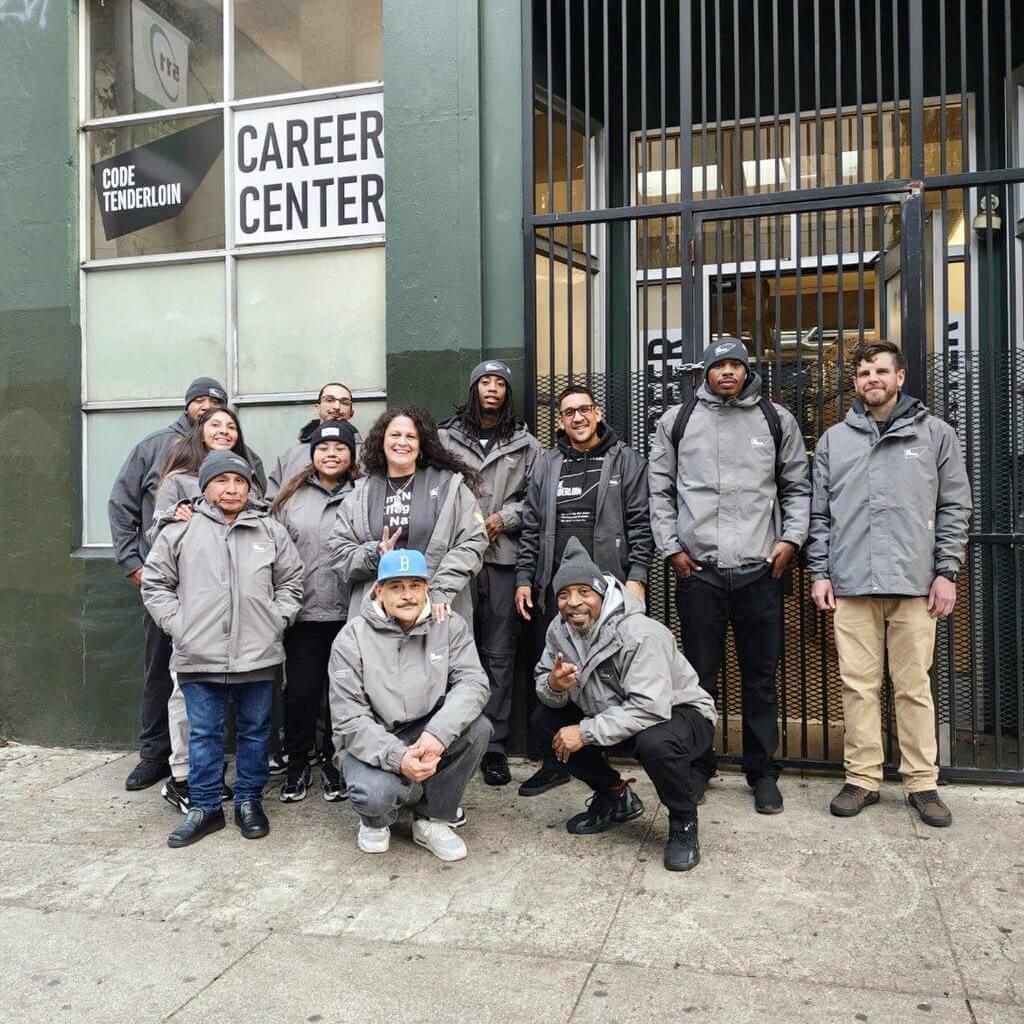
Del was immediately recognizable. He was wearing a pinstripe blazer over a Tenderloin Walking Tours t-shirt. That’s one of Del’s many community initiatives in the neighborhood. He’s also the founder of Code Tenderloin (opens in new tab) and community-appointed Mayor of the neighborhood.
As someone who has been doing trusted work in the area for decades, KALW wanted to talk to him about the neighborhood and what lessons the Warfield Commons can take as tenants move into the new building.
This interview has been edited for length and clarity.
KALW: So tell us about this neighborhood.
DEL: Well, the Tenderloin’s no different than any community. It has its ups and downs. It’s got its great days, it’s got its bad days.
I walked around this morning and we’re having a bad day today. It’s a lot more people out than normal, and that’s attributed to a lot of things: economic factors, the weather, days people get their benefits, and availability of illicit materials.
KALW: How did you first find your way to this neighborhood?
DEL: I just accidentally wound up in the Tenderloin. I didn’t believe it was real — the attitudes and the habits and the things that were going on. I thought it was a movie set. I got stuck here and I’ve been stuck here for 38 years.
KALW: What makes the Tenderloin feel like home?
DEL: Here in the Tenderloin, everyone knows your name. We not only know your name, we know who you are, what you do, your family.
If Bob passes by this corner every morning about nine o’clock-ish, and he don’t pass by this morning, we’re going up to his house. That’s not Walnut Creek. That’s not San Diego. That’s the Tenderloin. That’s how we do harm reduction.
KALW: And you’re known as the mayor of the Tenderloin. Can you tell me about what that title means to you?
DEL: I got that title from Mayor Ed Lee. He was scheduled to be at the White House with the Obamas to discuss homelessness but he couldn’t make the trip. So, as the chairman of the homeless board in San Francisco, his office asked me if I would represent the mayor at the White House, and I said, “Heck yeah, I’ll go.”
Being the unofficial/official mayor of the Tenderloin has a lot of honor. What it involves is putting two people together.
There was an incident yesterday with the police, so I’ll go over there and talk to the captain and get his rundown on it. I’ll say, “Look, you know, the community’s upset because of this, this, and this.”
Or vice versa. You know, the police may call me and say, “Look, we had an incident with a guy there named James on the corner… could you find out what we did wrong to him?” And I go and talk to him. Says, “Man, the police department called me concerned about how you feel about this.” And then we put it together if we can. It don’t always work but I try to build diplomacy.
KALW: What motivates you to show up in this way?
DEL: I’m an almost 80-year-old Black man and when I walk through the Tenderloin and I see a 80-year-old Black man laying on the sidewalk in his own waste, you know who I’m looking at? I’m looking at Del Seymour, ’cause that used to be me.
Until I can get people like him off that sidewalk, I’m gonna be down here doing whatever I can for this community, ’cause I understand this community. I’m not madly in love with it every day. Some days it pisses me off dramatically, but I still come back here every day ‘cause I feel like I need to be here
KALW: How have you seen the neighborhood change over the time you’ve been here?
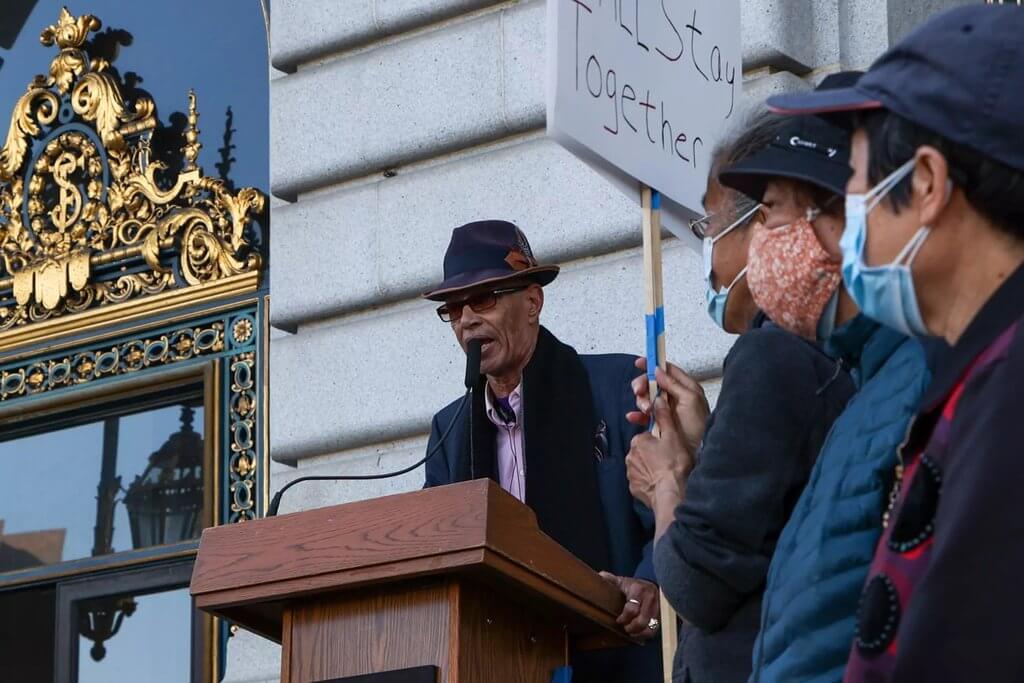
DEL: The population is changing a little bit, where, luckily we’re getting more immigrants than we’ve had before. Luckily, we’re getting more people of color than we had before. The use of drugs, the type of drugs has changed dramatically. Now we got a lot of new stuff that we didn’t have before.
But other than that, believe it or not, and you won’t hear this from a lot of people, there has been zero shift, zero change. We don’t deal with shifts and change ’cause it scares us. When you start talking about change, you’re talking about displacement, and we don’t want no parts of displacement.
KALW: How has the current administration’s stance on this neighborhood impacted life here?
DEL: A lot of our street people now are afraid of how far policing policies are going. We’re seeing a substantially higher number of people being detained and taken to centers. We’re not good with that.
Policing is not the way to solve drug addiction. We want some legitimate medical professionals. Policy should be set by doctors, not the mayor’s office, not the police chief, ’cause we have a serious medical disaster here called addiction, and it cannot be treated by the mayor.
KALW: What do you want people who are new to the Tenderloin to know?
DEL: We want people to know that when you walk by these living structures, you’re passing people’s houses. You’re walking through their bedrooms. Be nice. Look ’em in the eye, give ’em a wave, say hi.
If you walk through my bedroom tonight, I would expect you to wave and say hi. You gotta do the same thing for Tyrone.
KALW: How should newcomers to the area show up in this neighborhood?
DEL: As newcomers in this neighborhood, we want you to come and spend money in our businesses. We’re trying to open this restaurant right down the street right now, and we’re terrified because we don’t have enough street traffic and enough local workers.
There should be enough workers in this neighborhood even right now to support any and all businesses but they tend to bring their food to lunch.
One of our biggest companies down here is Zendesk. When they moved in and they brought maybe 1,000 employees, they did not have a lunch room ’cause they wanted to encourage their employees to use the surrounding neighborhoods.
Much different than Twitter. Twitter came in and one whole floor was a lunch room. When you come in and don’t use the services of a neighborhood, you might as well not be here. We don’t welcome that
Also — partner with the nonprofits and find out what the community needs are, ’cause our needs change every year.
KALW: What does this community need right now?
DEL: We have a situation, you can walk through and you see one of these structures on the sidewalk with people living in it, and you see a bunch of garbage outside. We need garbage cans. We don’t just need garbage cans, but we need servicing of those garbage cans. If you bring a whole bunch of garbage cans down here and you don’t service it regularly, you might as well not bring them.
KALW: How do you see the Warfield Commons supporting the work you do in this neighborhood?
DEL: We’re curious to see how that’s gonna work out. On that block you already got two other residential projects. One’s a hotel and one’s a condo. So it’s got the feel already of newer people. These new people tend to Uber in and Uber out, and I would rather see you all walk just like we walk.
KALW: For anyone reading this, what do you want them to take away from this interview?
DEL: I want them to fall in love with the Tenderloin. Eat, drink, and be merry in the Tenderloin. Ain’t nobody gonna bother you. And just bring people. Bring people. The more people you bring, the more they’ll tell, “Oh, I spent the night in the Tenderloin last weekend. It was wonderful. I had a great time.” That’s what we want.
About Hanisha Harjani
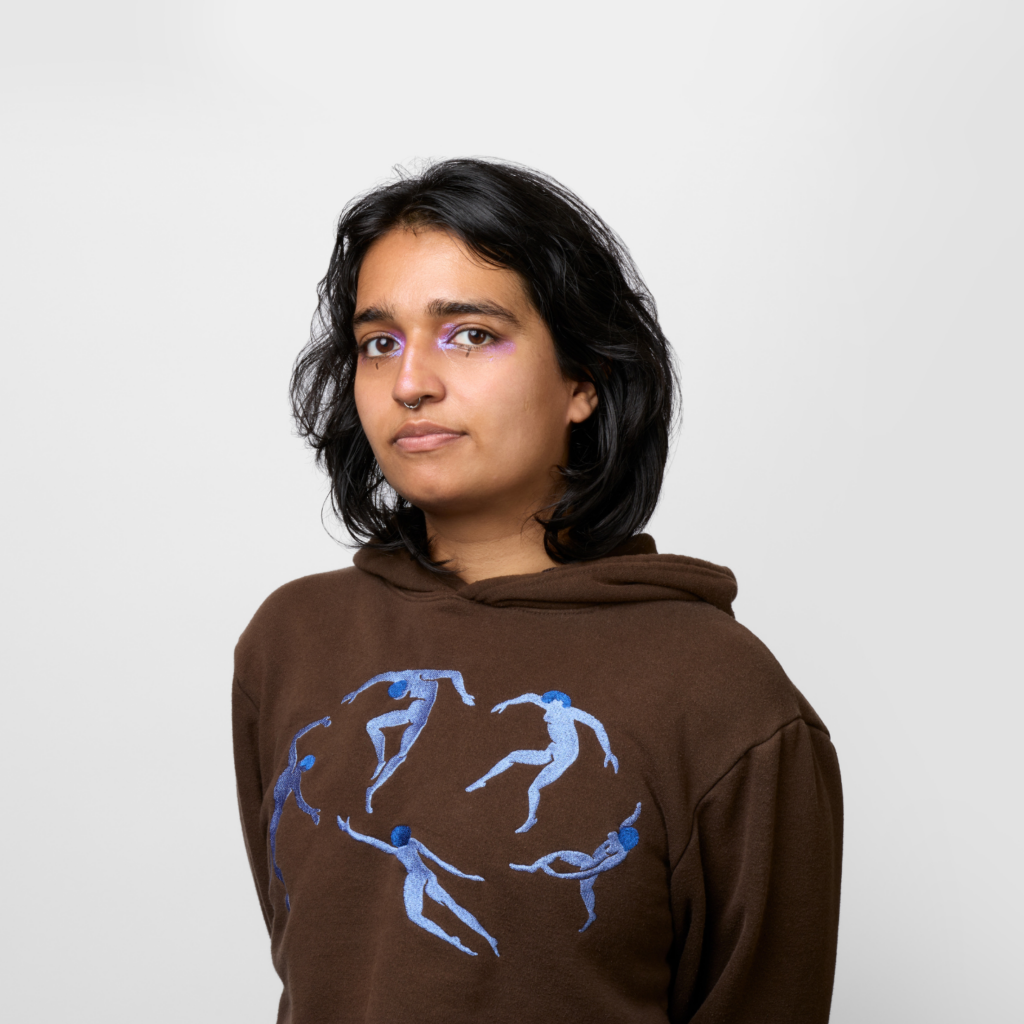
Hanisha Harjani is a journalist, educator, and multimedia artist living on unceded Ohlone land. They’re an award-winning reporter, producing work for outlets like NPR, The Guardian, the Markup, and the San Francisco Chronicle, where they’ve helped tell stories about mommy blogging, conversion therapy, psychedelics, dating apps, and satanism — among other things. They currently work as the Community Journalism Director at San Francisco NPR member station KALW (opens in new tab), where they facilitate training programs for new and early-career radio reporters taking non-traditional pathways into journalism. They also produce experimental radio show — transmissions from [the psychic deli] (opens in new tab) — on online community radio stations.
Read the series
This four-part blog series was developed in partnership between CAST and KALW Public Media, with interviews and content drafted by journalist, educator, and multimedia artist Hanisha Harjani.
- Community of Practice
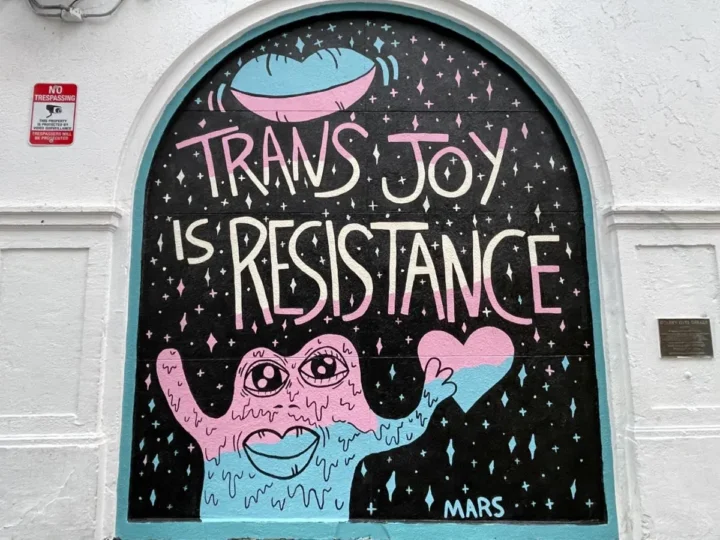
Beyond the Headlines: Carolina Osoria on Trans Joy, Community, and the Tenderloin
Carolina Osoria of the Transgender District talks trans history, joy, community power, and what meaningful allyship looks like in the Tenderloin.
- Community of Practice
A New Home for SF Public Press: Lila LaHood on Community, Journalism, and Warfield Commons
Lila LaHood on how it feels to be a new tenant in Warfield Commons and her hopes and dreams for her newsroom, the community of the building, and beyond.
- Community of Practice
Warfield Commons Meets the Neighborhood
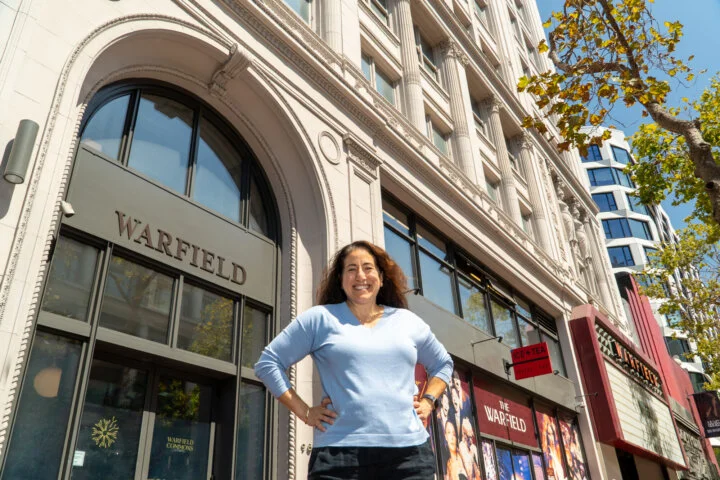
KALW Public Media’s Hanisha Harjani reflects on our Warfield Commons stories and what it means to enter a neighborhood thoughtfully by listening to those who were there before us.